Your company doesn’t operate the same way it did 20 years ago, and that’s not a bad thing.
As technology modernises and customer expectations and needs shift with it, processes and operations evolve. The same is true for printing. While office printing looks very different from what it did even 10 years ago, it’s still a critical component for large organisations — even after the pandemic.
COVID-19 transformed how people and businesses operate in large ways. For instance, the rapid shift to remote and hybrid work disrupted traditional printing models. However, this doesn’t mean printers and copiers are obsolete; it’s actually the opposite. As enterprises evolve, so do their printing needs, and your brand must ensure it has the proper business solutions going forward.
Here are some of the main ways printing has changed and what your company needs to know to choose the right tools.
Key Takeaways:
- How enterprise companies have changed their printing process post-COVID
- Trends that may affect current business practices and how you can mitigate these.
- Benefits for businesses, such as print on demand, printing services and security measures.
The Post-COVID Printing Landscape in Enterprises
The pandemic made remote and hybrid work essential, and that shift has remained largely permanent for many organisations. With hybrid work so prominent, decentralised printing is now necessary to keep up with demand and deliver printing capabilities no matter where people are working from. Now, printers are often spread across an office or network, moving away from one central hub to boost efficiency, flexibility and user convenience. Additionally, cloud-based printing and network-agnostic workflows are more popular than ever, supporting mobile, remote and multi-location printing.
With the rise of cloud-based printing methods and more print jobs coming in from non-corporate networks, organisations have demanded tighter and more secure printing. This can include the use of user authentication with a PIN, badge or app, preventing sensitive documents from being left unattended in the output tray for unauthorised eyes.
Lastly, one of the most prominent changes that has occurred in recent years is the shift in cost dynamics. Companies now spend more on ink, toner, devices and supplies as they support distributed printing, with more printers and copiers in use and less visibility into print usage across locations.
Thankfully, Epson business printers and copiers provide the necessary decentralised setups and cost controls that enable companies to step into the future with confidence and certainty.
Key Trends Reshaping Enterprise Print in the New Era
Business trends and major technology changes have shaped enterprise printing post-COVID. What was once hardware-focused, office-bound function is now a connected, data-driven ecosystem that supports hybrid work, strengthens security and improves operational efficiency. Modern printing integrates with cloud platforms, enabling remote device management, providing real-time insights and embedding security protocols.
Here are the main innovations and mindset shifts that have spurred printing into the new era:
Cloud Print Management
Enterprises are increasingly moving away from on-premise print services in favour of cloud-based print management. Instead of hosting print queues and drivers on local infrastructure, print services are delivered through secure cloud environments. Users submit print jobs through a web portal, mobile app or universal print driver, and those jobs are routed through encrypted cloud services to the appropriate device.
This shift allows organisations to scale more easily, reduce the burden on IT teams and maintain centralised control over distributed print environments. Cloud infrastructure also strengthens security and supports consistency across locations.
Automation and Intelligent Workflows
Print environments are becoming more automated, with routine tasks like job submission, print readiness checks and queue management handled automatically through rules-based systems. For example, pre-configured workflows can detect file type, size or department and automatically route jobs to the most cost-efficient or appropriate device. Print readiness check tools can scan documents for formatting issues before printing, reducing errors and reprints.
AI-driven capabilities are often used to predict maintenance needs, optimise job prioritisation and automate consumable ordering. Print workflows are being integrated into broader enterprise automation systems, such as accounts payable, HR and data entry processes.
Sustainability and Efficiency
Sustainable practices have become a core consideration in enterprise printing strategies, combining device-level features with policy-driven controls. Features such as default duplex printing and ultra-low-power devices help reduce the environmental impact. Print-on-demand models further minimise waste, while green print initiatives align printing practices with broader corporate environmental, social and governance goals. Print management software can also enforce rules like limiting colour printing, setting print quotas or prompting users to confirm large jobs before release, preventing unnecessary waste.
Security and Zero-Trust Printing
As printers increasingly function as networked endpoints, they’re now recognised as potential cybersecurity risks. This approach requires user authentication — via badge, PIN, biometrics or single sign-on — before a document is released. Print jobs are encrypted both in transit and at rest, ensuring that sensitive data cannot be intercepted. Secure release (also known as pull printing) prevents documents from sitting unattended in output trays. Zero-trust printing models emphasise full visibility into who printed what, where and when.
Strategic Consolidation and Managed Print Services
The managed print services industry is growing smaller, with fewer providers offering more end-to-end solutions that include hardware, software, monitoring and maintenance under a single contract. Instead of purchasing devices outright, many enterprises are outsourcing print infrastructure to these partners to reduce capital investment and access specialised expertise.
These providers use remote monitoring tools to track device health, automatically dispatch service technicians and replenish consumables before they run out. Flexible pricing models, such as click-charge billing, leasing and predictable cost structures, have become increasingly common, creating predictable operational expenses rather than large capital investments.
Data-Driven Print Analytics
Organisations are using print analytics to gain deeper insight into usage patterns, optimise fleets and control costs. Dashboards display metrics such as volume by department, colour vs. monochrome usage, peak usage times and device utilisation rates. By analysing this data, organisations can right-size fleets, eliminate underused devices and shift high-volume jobs to more cost-efficient equipment. Predictive analytics identify trends that may signal overuse or potential failure, allowing IT teams to act proactively. Plus, real-time tracking and job-level data enable better decision-making, and predictive analytics help prevent company downtime.
Mobile and Remote Printing
Hybrid work has driven increased demand for mobile and remote printing from smartphones and tablets. Mobile printing solutions typically use cloud-based authentication and encrypted job submission. Users can send documents via email-to-print, mobile apps or browser-based portals without installing traditional print drivers.
Employee-friendly solutions such as driverless printing, cloud-enabled email-to-print and location-agnostic access make it easier for users to print securely from anywhere, without sacrificing IT oversight or control.
Strategic Opportunities Your Business Could Benefit From
So, how can your company take advantage of these shifts and maintain its competitive edge without overhauling its entire operation? Try filling gaps or introducing smoother processes with these tactical ideas:- Adopt cloud print management: Improve flexibility, security and disaster resilience. Epson supports cloud-enabled workflows through remote device management, centralised configuration and secure job routing across distributed locations.
- Implement analytics and automation: Drive efficiencies, reduce waste and predict failures. Epson devices are equipped with remote monitoring tools that track usage patterns, consumable levels and device health in real time.
- Strengthen print security: Zero-trust architecture, secure release and identity and access management integration. Epson business printers support user authentication methods such as PIN codes, ID cards and integration with existing access control systems.
- Sustainability integration: Plan for more sustainable consumables, print-on-demand and circular programs. Epson’s Heat-Free Technology uses less energy compared to traditional laser printers, helping reduce overall power consumption.
- Future-proofing with innovation: Explore AI-enabled printers, IoT printing, advanced forms like large-format or 3D printing, where relevant. Epson integrates IoT-based monitoring into its business print portfolio, allowing devices to communicate status data for proactive service and optimisation.
Next Steps: Choose Epson
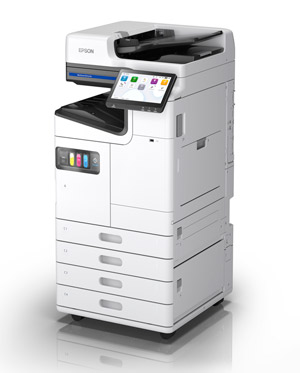
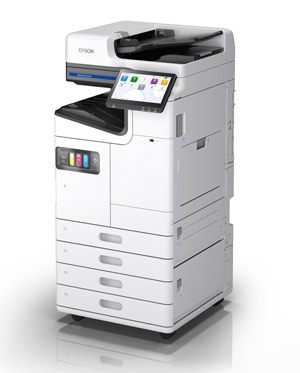
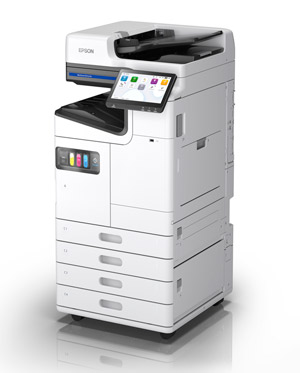
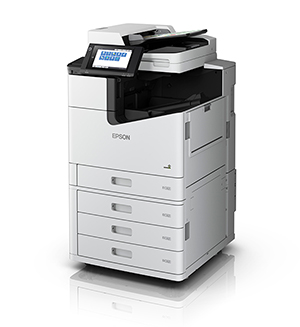
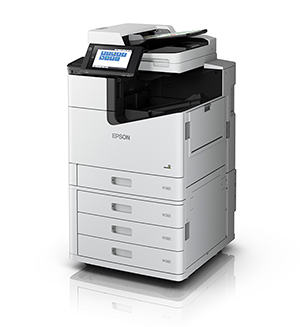
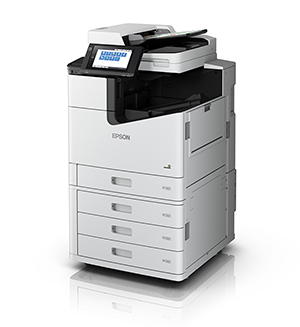
Epson printers and copiers are built for large enterprises, making printing easier and more secure than ever before. Our WorkForce Enterprise business printers reduce downtime, lower total cost of ownership and support your evolving workplace needs. They also boost sustainability initiatives by lowering energy usage and providing more insight into materials usage.
For future-ready devices tailored to meet your company’s needs, partner with Epson. Connect with our team today to see how our WorkForce Enterprise range can ensure your brand’s future is bright and full of strategic opportunities.